
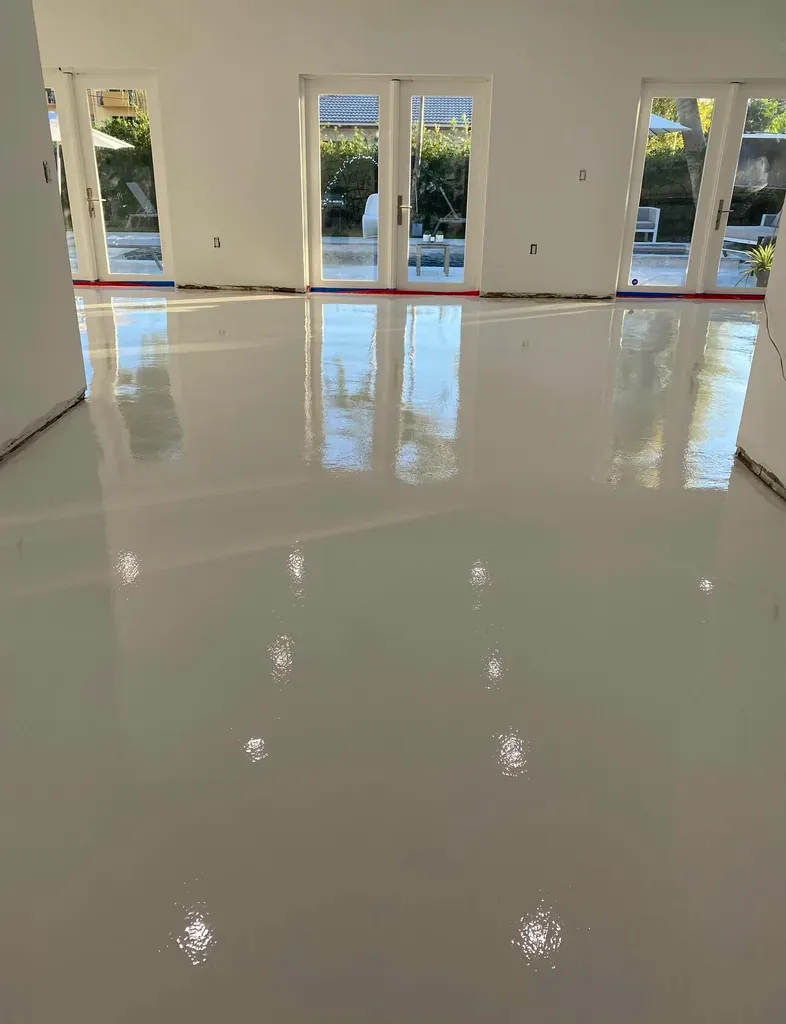
Epoxy Flooring
The base system: a poured resin layer that seals the slab and gives you a seamless, easy-to-clean surface with no grout lines to scrub.
Services
Eight resin systems, five concrete treatments and waterproofing, installed across Florida. If you are not sure which one fits your space, send photos — we will tell you what the slab can take.
Every system on this page starts the same way: we grind the slab down to a surface the coating can bond to, and we test it for moisture before a single bucket is opened. That is the part that decides whether a floor lasts fifteen years or peels in two, and it does not change whether you are coating a two-car garage or a warehouse. What changes is what goes on top — and that is what this page is for.
Most floors we install run $5 to $15 per square foot installed, depending on the system: solid colour $5 to $8, flake $6 to $10, metallic $8 to $15, polished concrete $3 to $12. A standard two-car garage starts around $2,500. These are estimates — every project gets an on-site evaluation and a written quote.
Poured systems that seal the concrete and give it a finish: decorative, industrial, or somewhere in between. These are the ones people mean when they say epoxy flooring — the differences are in the resin, the aggregate broadcast into it, and the topcoat that protects both.
8The base system: a poured resin layer that seals the slab and gives you a seamless, easy-to-clean surface with no grout lines to scrub.
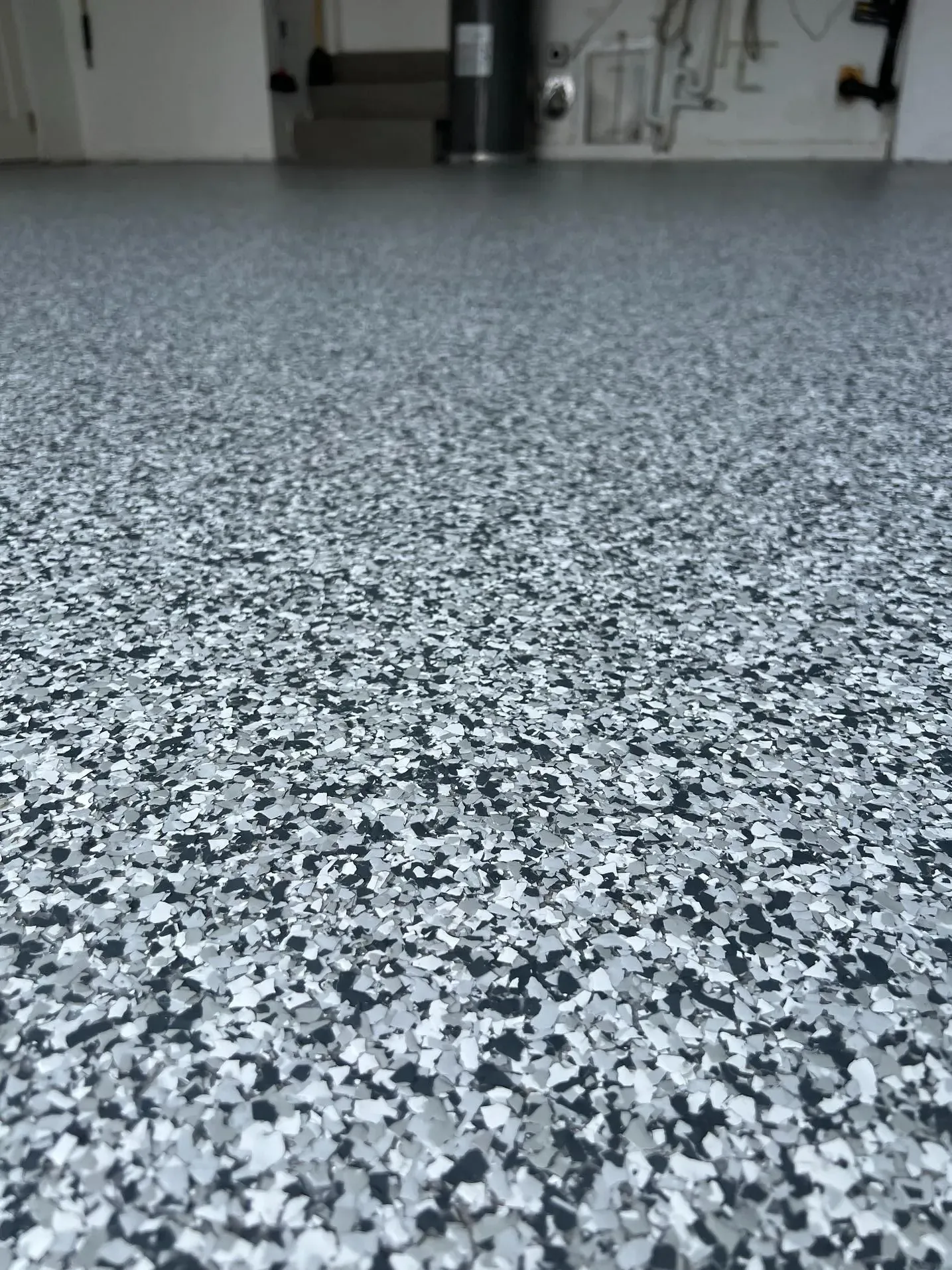
Vinyl flakes broadcast into the wet resin, then sealed. Hides dust and tire marks better than any solid color — the usual pick for garages. A heavier broadcast gives a full, granite-like texture with more grip, which is what holds up around pools and service areas.
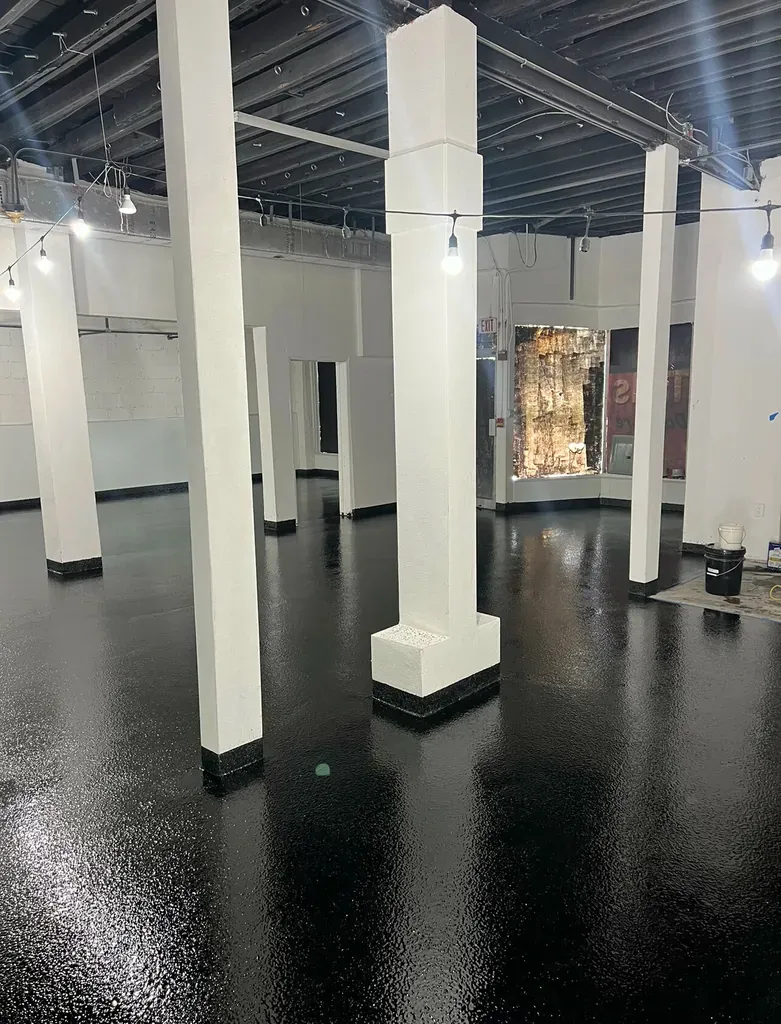
One uniform color, high gloss, no pattern. The cleanest look for showrooms, corridors and any space where the floor should stay quiet.
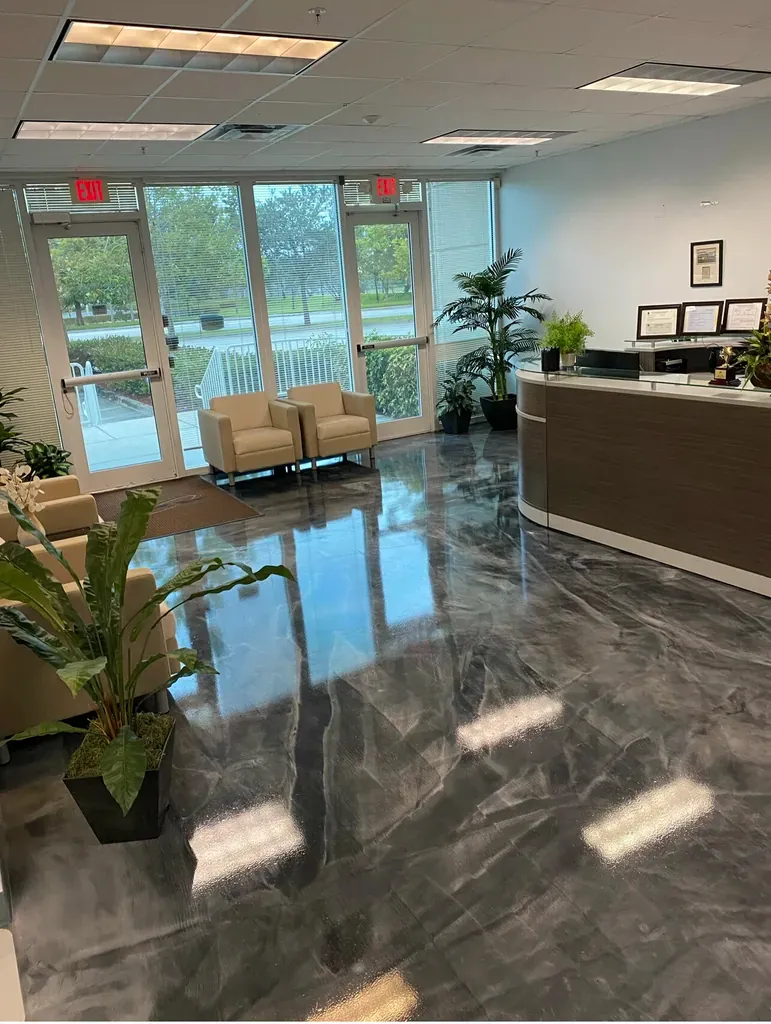
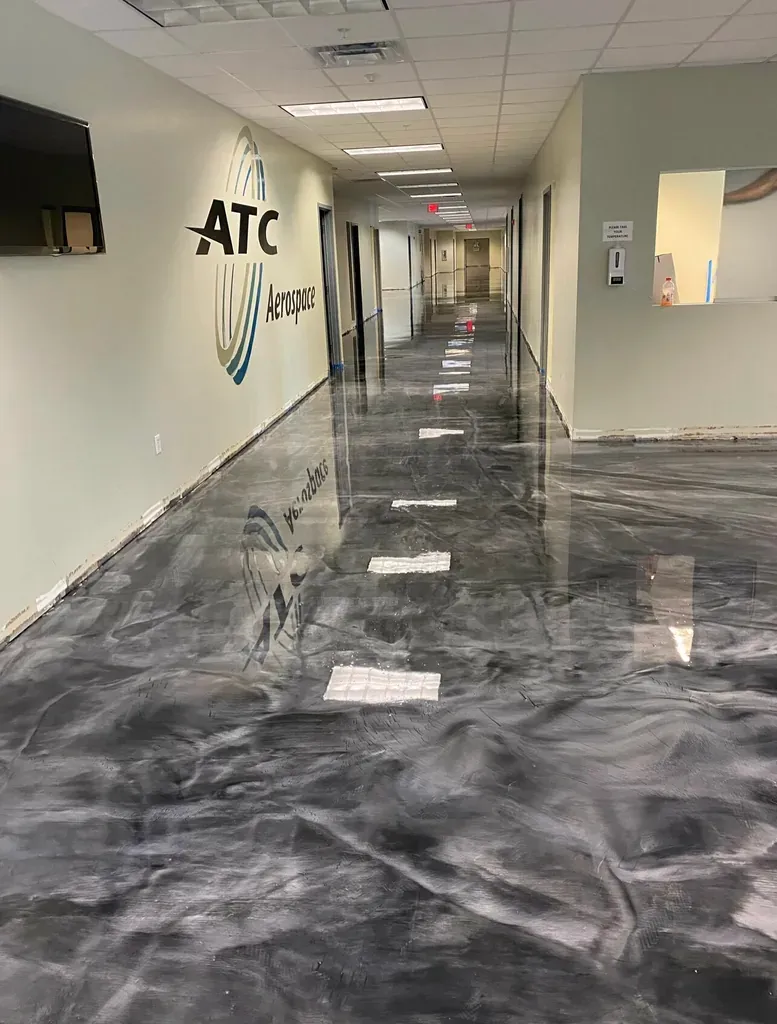
Metallic pigments moved through the resin while it cures, so every floor comes out with its own veining. No two are the same — this is the one people ask us for by name.
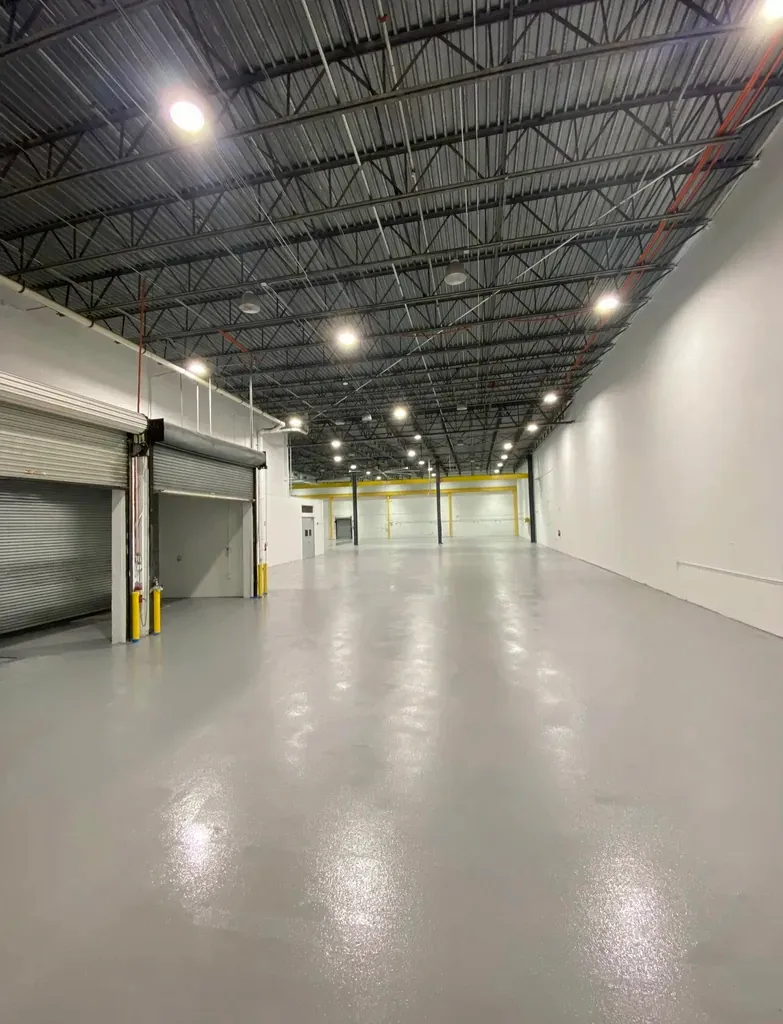
Colored quartz aggregate in a resin matrix. The toughest decorative option we install — built for kitchens, labs and wash-down areas.
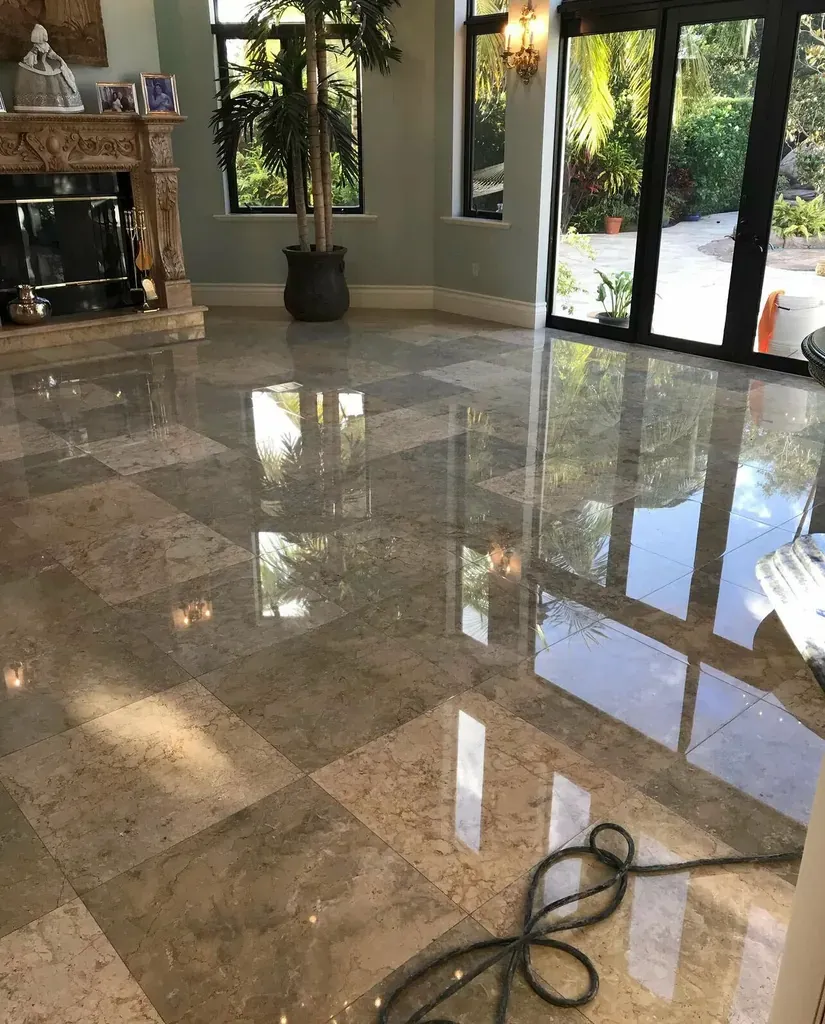
Diamond honing and polishing that brings dull, scratched marble back without replacing a single tile.
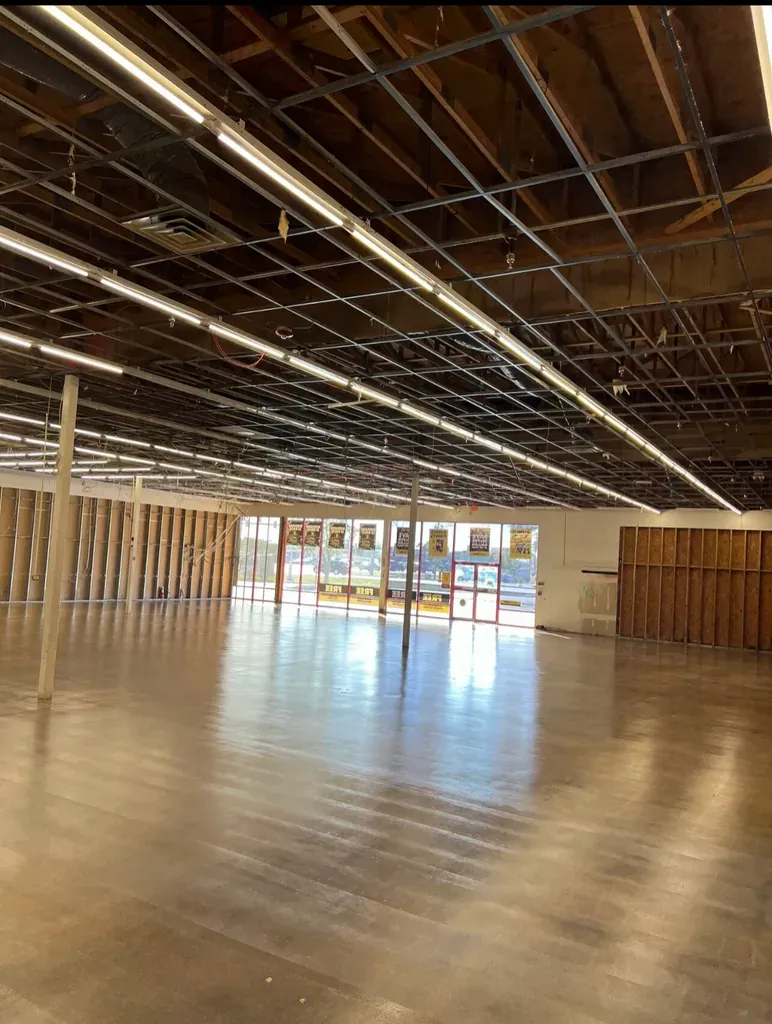
Grinding, patching and re-polishing original terrazzo — common in older South Florida buildings and almost always worth saving.
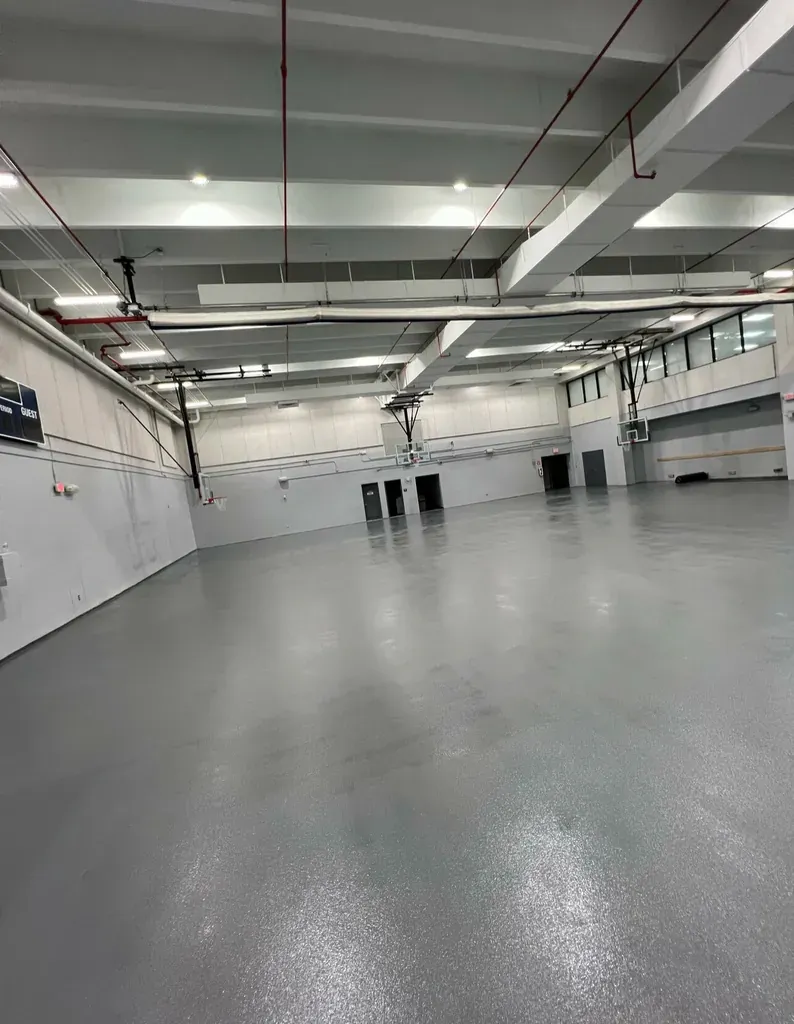
A urethane topcoat over epoxy for UV stability and chemical resistance. What keeps a floor from yellowing where sunlight reaches it.
Treatments that work with the slab you already have instead of covering it. Cheaper than a coating when the concrete underneath is worth keeping, and the only option when a floor has to stay breathable.
7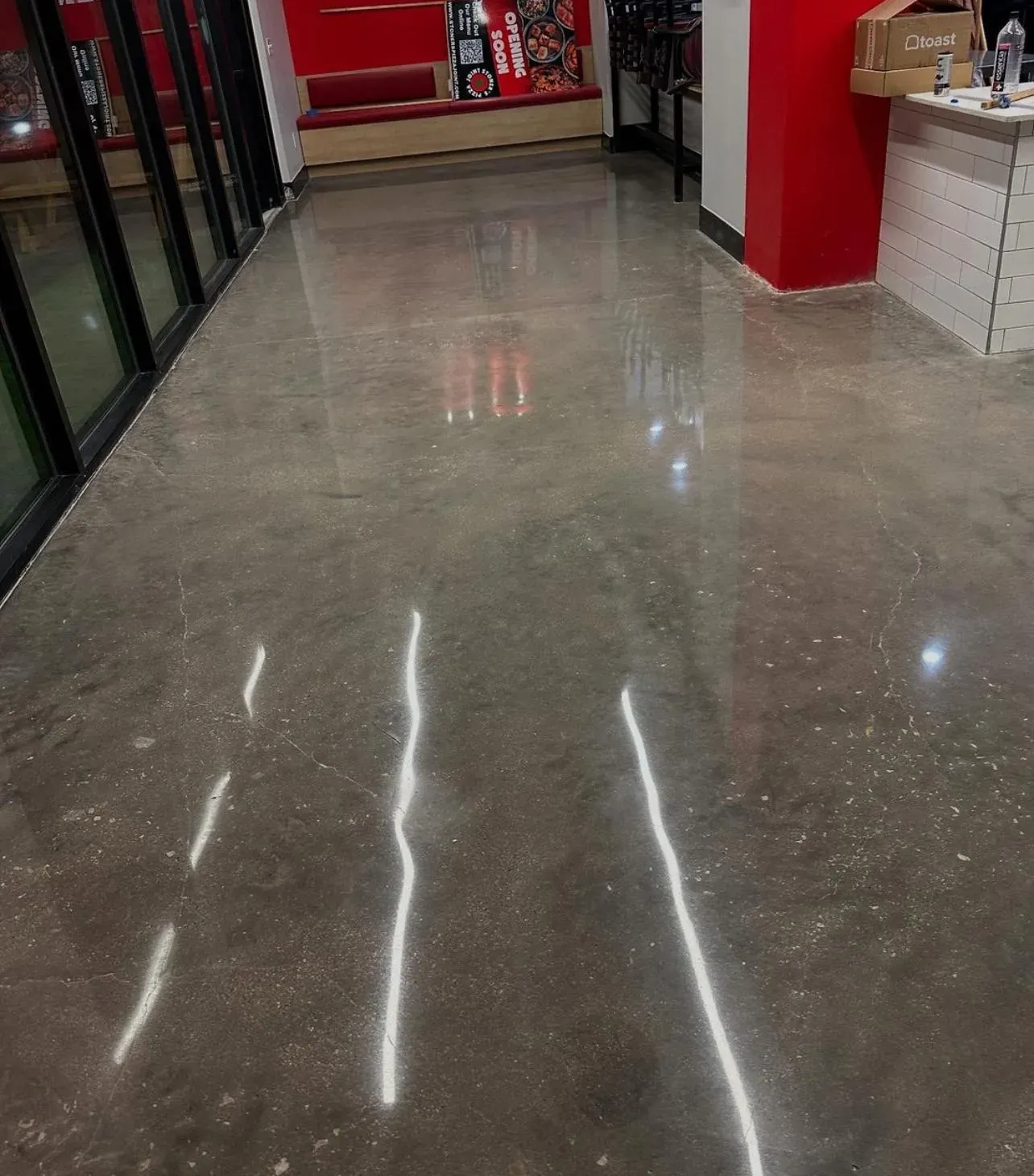
Mechanically refining the slab you already have through progressive diamond grits. No coating on top — the finish is the concrete itself.
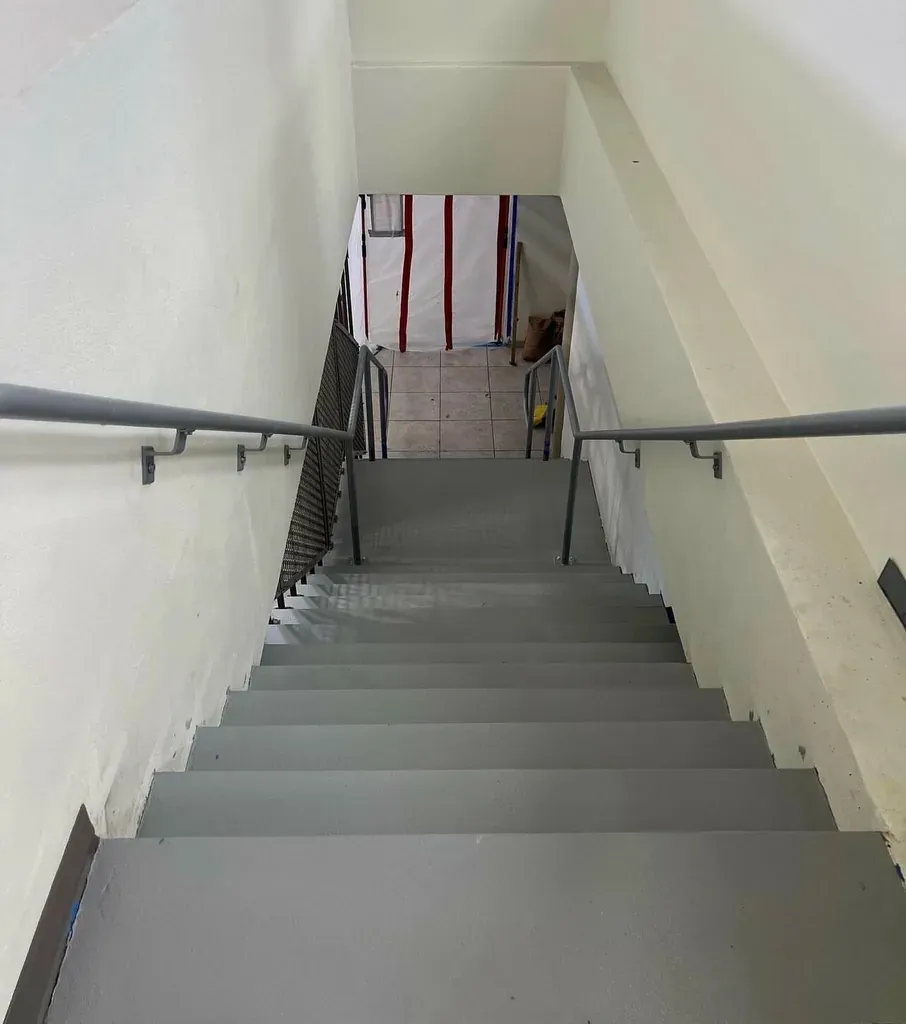
A 2–3 mm cementitious skim coat that resurfaces damaged concrete — and goes over stairs, walls and countertops too.
Acid or water-based stain that penetrates and colors the slab permanently, keeping the natural variation of the concrete.
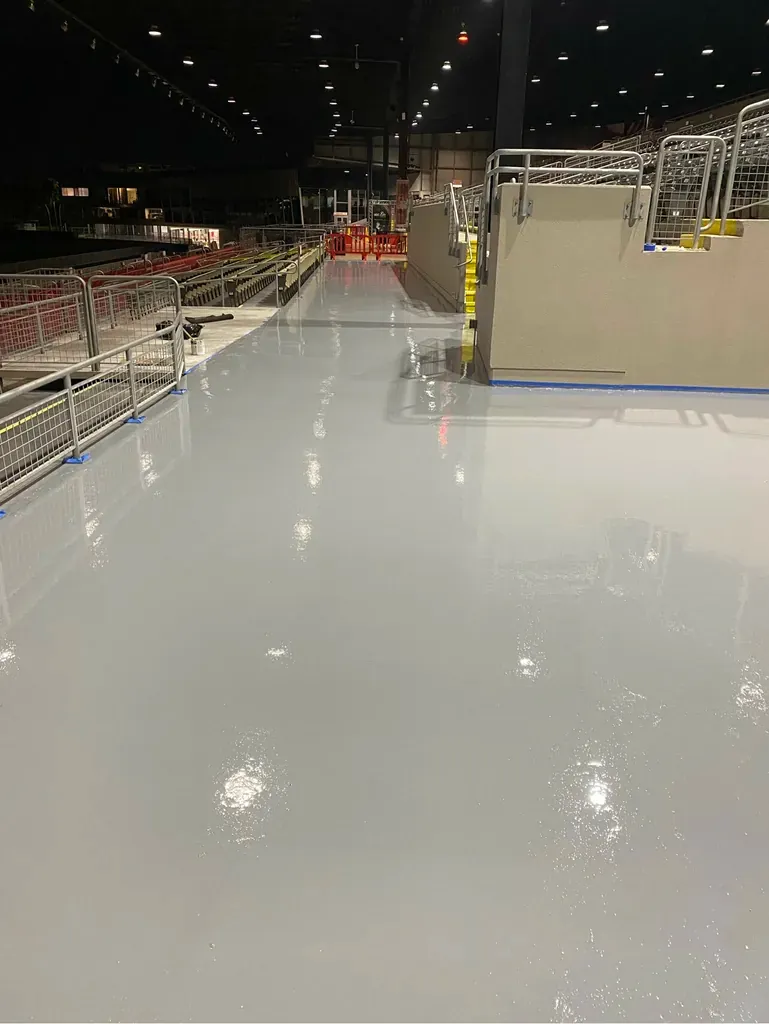
A textured coating for the concrete around a pool: cooler underfoot than bare slab, grippy when wet, and sealed against chlorine and sun.
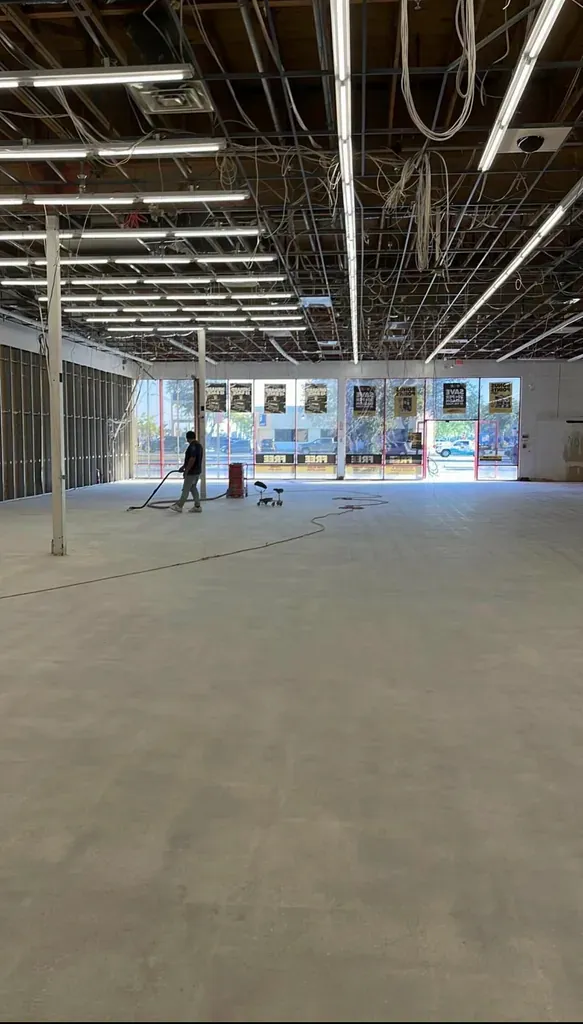
A penetrating or film-forming sealer against oil, salt and water. The cheapest thing you can do to make a slab last longer.
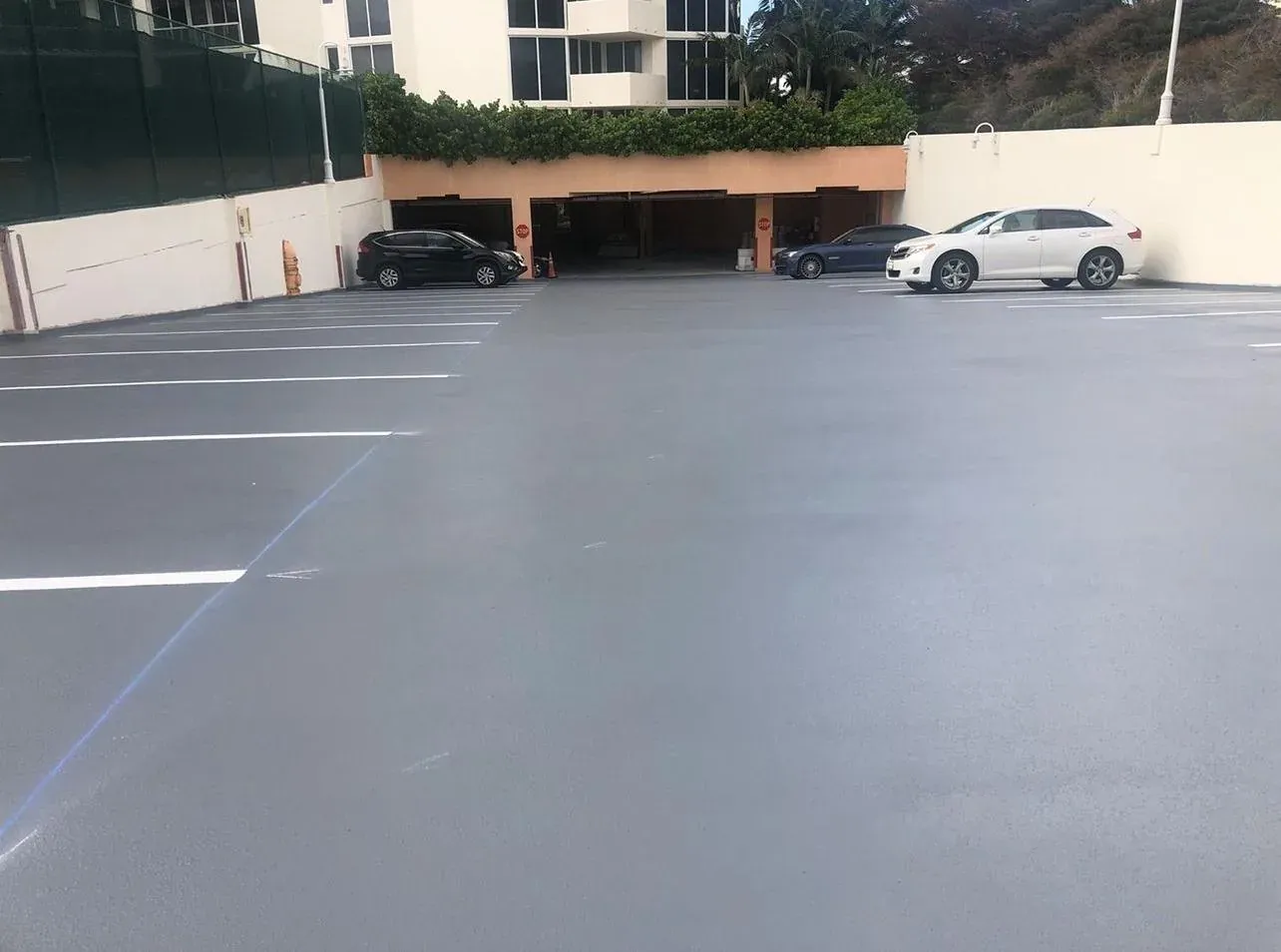
Membrane systems for balconies, terraces, walkways, pool decks and parking slabs: crack repair, primer, waterproofing membrane and a slip-resistant finish, chosen for the water exposure and the traffic the surface takes.
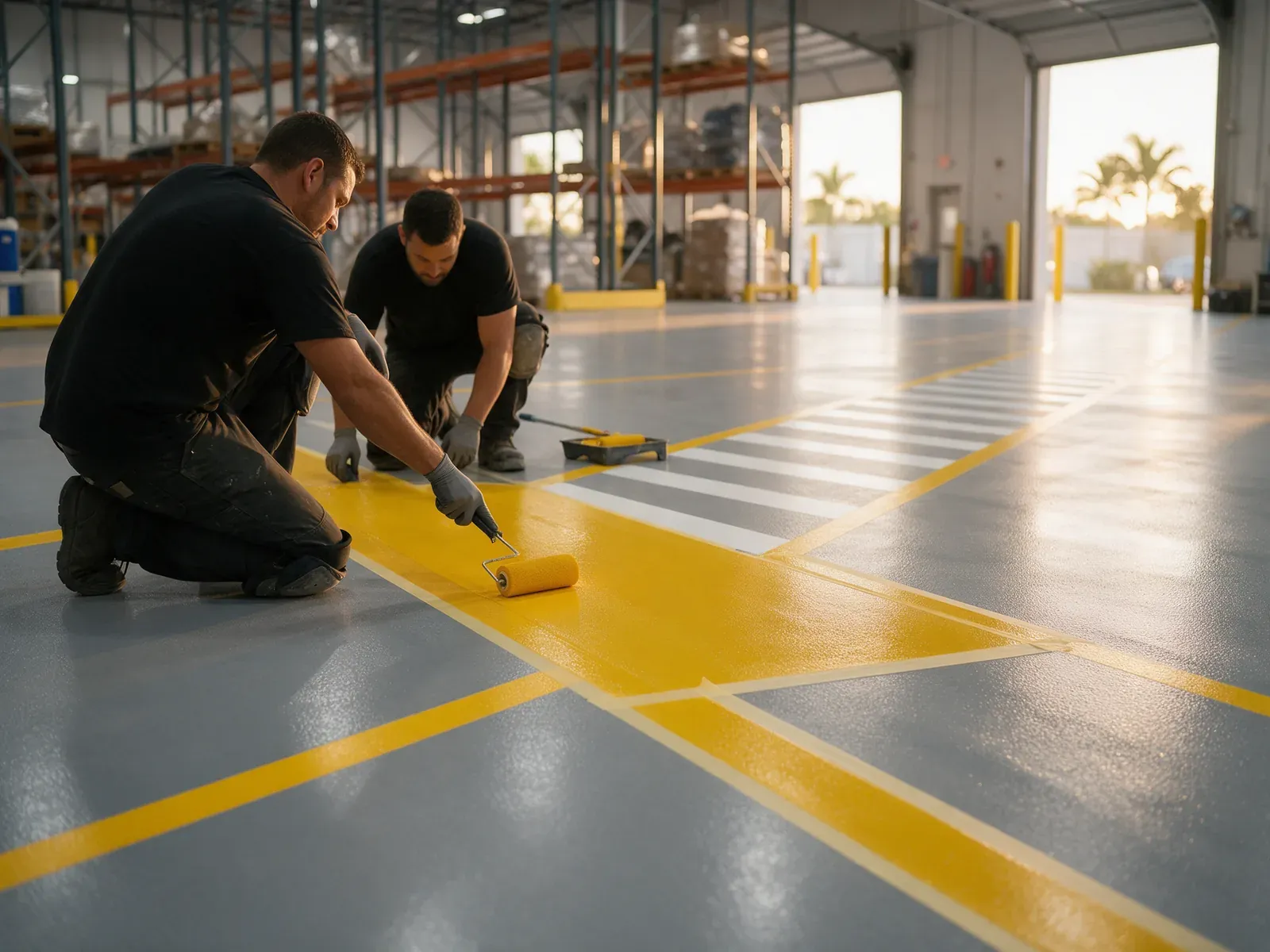 Illustrative image
Safety lanes, walkways, parking stalls and work zones marked in epoxy or traffic coating for warehouses, shops and garages — straight, masked lines built to take forklifts and cars.
We are registered in Weston and we work across Florida. Every system on this page is available anywhere in our coverage area — the crew travels, the price does not change with the drive.
Send photos of the space and the approximate square footage. We will tell you what fits and what it costs.